
Seminars, Coaching & Personal Development
Knowledge, self-awareness and real support for the things that are actually hard
Relationships, family, education and working life keep presenting us with changes and decisions that a quick answer does not settle. They need room to think, a clearer view of ourselves, and some practical tools.
We create a space for learning and reflection — for parents, teachers, professionals and anyone trying to understand themselves and the people around them a little better. The approach draws on systemic thinking, counselling, positive psychology, coaching and years in classrooms.
The point is not to hand out solutions. It is more awareness, more options, and something you can use on Monday.
Parent counselling
ParentsGrowing alongside our children
Parenting is a relationship that keeps changing shape. Every age brings new needs, new questions and a fresh set of things nobody warned you about.
How do we set limits without losing the connection? How do we actually listen? How do we handle conflict? How do we support a child's confidence and independence at the same time?
The seminars help participants understand children's needs better — and their own position inside the relationship. Through discussion and practical tools we look at ways of communicating that build trust, respect, emotional safety and co-operation at home.

Parents of children of any age, and parent associations.
Support for teachers
TeachersTeachers need somewhere to put it down too
A teacher's day involves far more than teaching. Relationships with students and parents, conflict, the demands of the classroom, emotional load and constant change are all part of the job description, whether or not they appear in it.
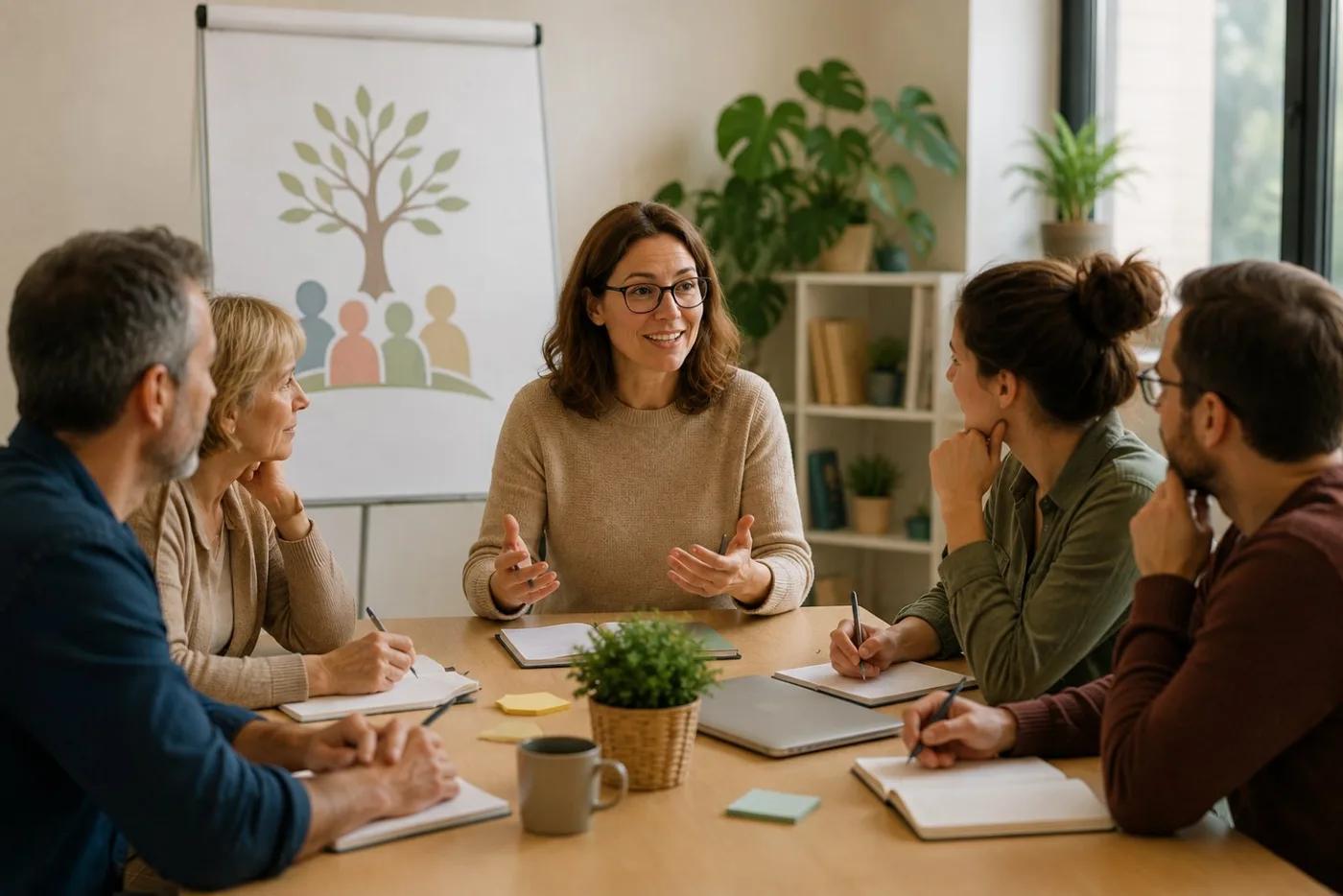
These seminars open a space where skills around communication, boundaries and working with parents can develop — with colleagues who recognise the situation.
Because a teacher who feels supported has more to give the people around them.
Teachers at every level, school leaders and staff teams.
Communication & conflict
RelationshipsFrom reacting to talking
Conflict is part of every human relationship. The question is never whether it happens, but what we do with it when it does.
We look at how needs, feelings, expectations and different ways of expressing them turn into misunderstanding — usually long before anyone raises their voice.
We practise listening properly, saying what we need clearly, and recognising the patterns that keep repeating. The move we are after is from conflict to understanding and an actual conversation.
Self-awareness & personal development
YourselfUnderstanding ourselves a little better
Personal development starts when we can look at our own thoughts, feelings and choices with some clarity — and without immediately defending them.
Through experiential work and reflection we make room to examine needs, boundaries, relationships, the beliefs that shape us, the roles we take on and the changes we say we want.
Self-awareness does not mean having the answers. It means starting to ask better questions of ourselves.
The systemic approach
MethodSeeing a person inside their relationships
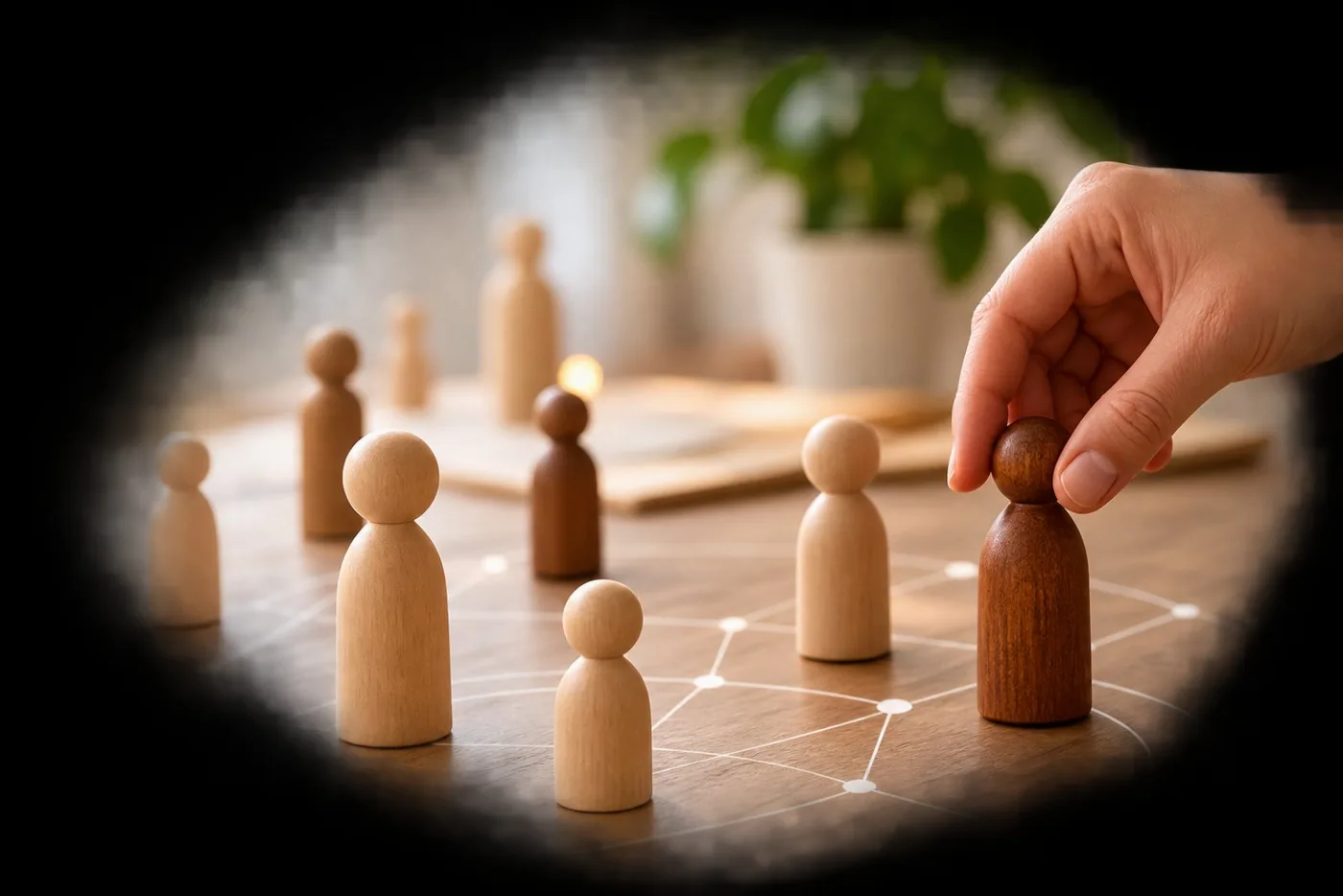
Systemic thinking helps us look at a person not in isolation but within the systems they belong to: family, school, work and the people around them.
Very often a problem is not located in one person at all. It sits in the relationships, roles and patterns that have formed around them.
The systemic approach lets us look at a situation from more than one angle and find new ways of understanding it, and of responding.
Positive psychology & resilience
MethodDeveloping the strengths that are already there
Positive psychology does not look only at what is going wrong. It also looks at the strengths, abilities and inner resources that let people grow and absorb change.
The aim is that participants come away recognising not only what they find difficult but what they have to build on.
Mentoring & coaching
One-to-oneFrom uncertainty to a clearer next step
There are stretches in life and work where we know something has to change but not what, or in which order.
Mentoring and coaching create room for goals, priorities, reflection and action. Within a structured process you can examine the options, name the obstacles and the openings, and arrive at concrete next steps.
This is not someone deciding for us. It is a process that helps us see our own direction more clearly.
Careers guidance & transitions
Students & young peopleEvery change can be a starting point
Choosing a course, changing direction or moving into a new working environment tends to arrive with a fair amount of uncertainty attached.
The sessions help participants look at their skills, interests, professional values, goals and the options genuinely open to them — as opposed to the ones they assume are expected.
The aim is for the decision to stop being a reaction and become part of a more deliberate path.

Students choosing a course, young people starting out, and professionals in transition.
Seminars for schools, associations & organisations
GroupsContent shaped around the people who need it
Seminars can also be designed for a specific group or organisation. Schools, parent associations, education providers, organisations and professional teams can choose themes that match what they are actually dealing with.
Length, depth and focus are adapted to the profile of the participants.
The approach stays deliberately experiential, participatory and tied to everyday practice.
No ready-made answers. More understanding, and more options.
Counselling has no business telling anyone how to live. What it can offer is the space and the tools to look at your own situation differently, and to decide more consciously what the next step should be.
Understand. Communicate. Move forward.