
Greek for the Diaspora
The Greek language as a living link to Greece
For families of Greek descent, Greek is rarely just a language. It is what grandparents switch into. It is summers on the island, the wording of a recipe nobody wrote down, the reason a name is spelled the way it is — an identity that kept travelling.
We build programmes specifically for children, teenagers and adults of Greek descent in the United States, Australia, the United Kingdom, Canada, Germany and everywhere else Greeks have settled.
The aim is not to «teach Greek». It is for our students to understand, answer, and stop feeling like a guest in their own language.

Greek that has a place in daily life
Our approachNo two children of the diaspora arrive with the same Greek
Some children hear Greek at home every day but have never read a sentence of it. Some understand everything and answer in English. Some arrive with a handful of words from a grandparent and start close to the beginning. All three are normal.
So teaching starts from the Greek that is actually there — the real level, the age, and what this particular student needs next.
Through a modern, conversational lesson we build speaking, understanding, reading, writing and vocabulary. But the first goal is smaller and more important: that using Greek stops feeling risky.
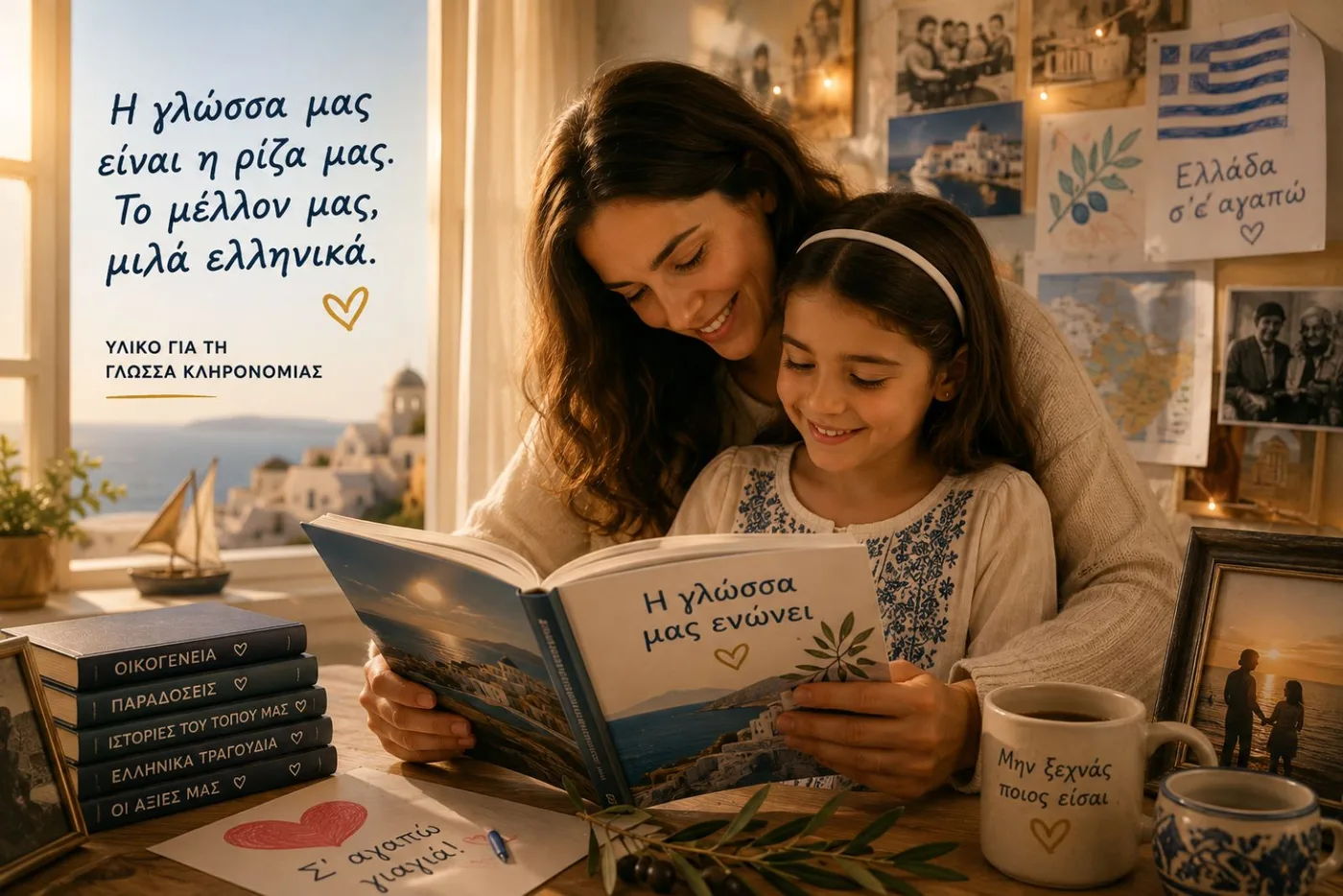
For children of the diaspora
ChildrenSpeaking Greek because they want to, not because they have to
A child growing up between two or more languages needs a different way in than a standard language course — especially if Greek has become the language of Saturday mornings and obligation.
Lessons are hands-on and built around the child's age: stories, pictures, games, songs, making things, and topics from their own week rather than a textbook's.
The goal is for Greek to earn a real place in the child's life. To talk to relatives in Greece. To read a story. To send a message. To follow what the adults are laughing about. To go to Greece and find that it works.
And above all, to attach Greek to a good memory.

For teenagers
TeenagersA deeper relationship with the language — and with where they come from
As children get older, their relationship with Greek changes. It stops being something the family does and starts being something they decide about.
For teenagers of the diaspora we build a space where Greek develops through subjects that match their age and their interests, not their parents'.
We work on speaking, on reading more demanding texts, on writing, and on widening vocabulary — without cutting the language off from the present day.
Greece appears through contemporary language, music, culture and ordinary life, not only through history and tradition.
For adults of the diaspora
AdultsIt is not too late to come back to your own language
Some people grew up surrounded by Greek and never learned it properly. Some speak it easily but would not attempt a letter. Some only started wanting it once the generation that spoke it began to thin out.
Adult programmes start from the level that is actually there and the reason you came — which is rarely «to learn Greek» and more often something specific.
The approach is practical and conversational, building spoken and written Greek and, gradually, the confidence to use it in front of people who speak it better than you.
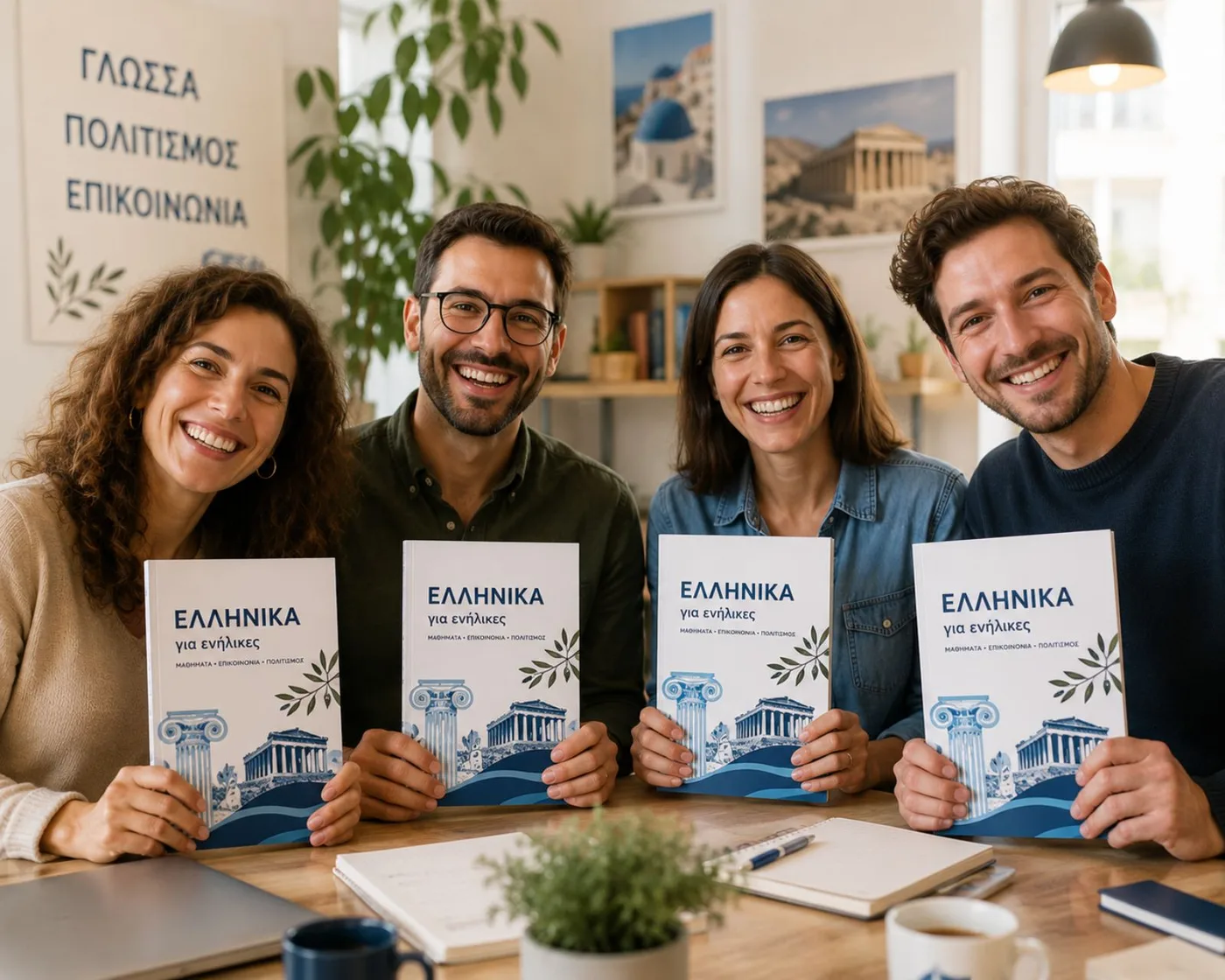
Language and culture together
ContentBecause a language is not only words and grammar
Greek makes far more sense when it comes with the world it grew in.
So our programmes bring in Greek history, geography, mythology, literature, music, customs, festivals and everyday life in Greece today.
The student does not just learn what a Greek word means. They discover the world that word lives in.

Greek online — from any time zone
FormatDistance from Greece does not have to mean distance from Greek
Online lessons let children, teenagers and adults of the diaspora learn Greek whatever country they live in — and that is the whole point, because the diaspora is not concentrated anywhere.
With proper digital tools, interactive material and structured lessons, the teaching stays personal and conversational through a screen.
Melbourne, Chicago, Toronto, London, Johannesburg, Munich — scheduling across time zones is something we plan for, not something we apologise for.

Material written for diaspora learners
MaterialsHeritage Greek is a different job from school Greek
Teaching Greek as a heritage language is not the same as teaching it to children who go to school in Greece. The gaps sit in different places: strong listening, hesitant reading, vocabulary that stops at the edge of the kitchen.
So we use and write material matched to the level, the age and the language environment the student actually lives in.
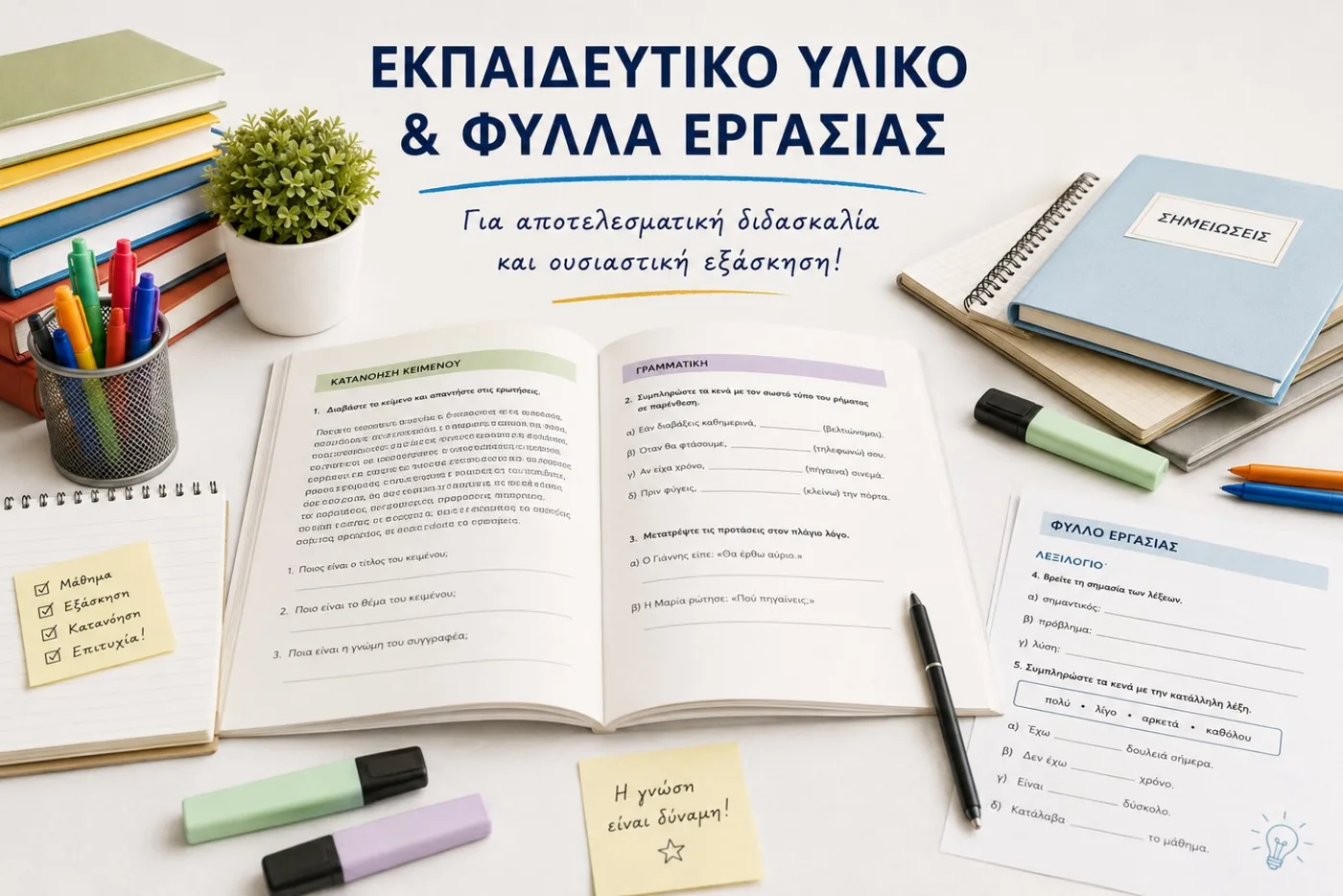
Worksheets, vocabulary, short stories, games, reading and writing tasks and cultural material help children keep steady contact with Greek between lessons.
More than a Greek class
We want children to start speaking more Greek.
To stop being afraid of getting it wrong.
To talk to the people they love, in the language those people think in.
To understand better where they come from.
Keeping Greek alive, one generation at a time
We want our students to feel that Greek belongs to them — even if their daily life happens thousands of kilometres and several time zones away from Greece.
Learn Greek. Speak it. Stay connected. Keep Greece close.